Welcome to this University of Bath web resource addressing...
The Commercial Determinants of Health
The global surge in non-communicable diseases (NCDs) – diseases like cancer, heart disease and diabetes – is primarily driven by the consumption of harmful products such as tobacco, alcohol, and unhealthy foods, along with exposure to air pollution from fossil fuels. Research indicates that these four factors alone account for approximately one-third to two-thirds of all deaths globally and 40% to 80% of NCD-related deaths. The economic burden is immense, with the cost of NCDs projected to reach USD 47 trillion between 2010 and 2030.
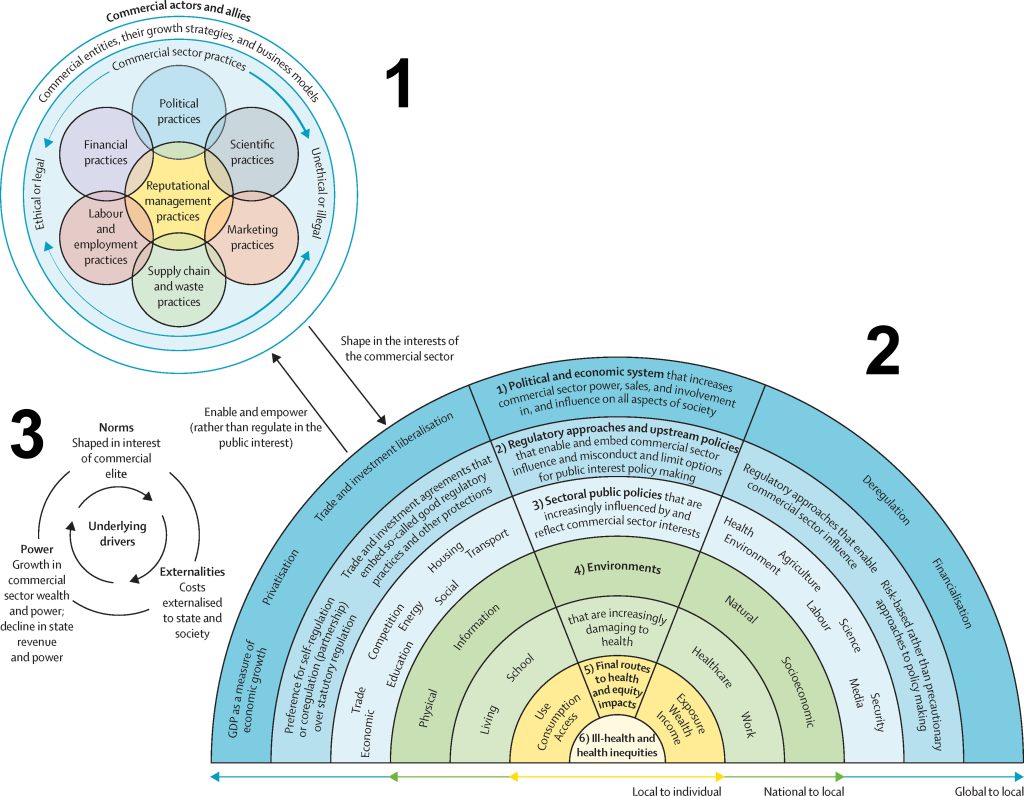
In 2023, academics at the University of Bath led on the publication of a conceptual model of the Commercial Determinants of Health (CDoH) in the first paper of the Lancet Series on this topic. The model was designed to visually represent how commercial actors influence health outcomes.
This web resource is intended for policymakers, academics, researchers, advocates, and practitioners working to address the CDoH. It provides a simple, structured way to explore and prioritise potential approaches to tackling these determinants using the model as a guide.
By using this resource, you can identify and reflect on the strategies most relevant to your goals and context. To learn more about the original model and how to use this site, please watch the introductory video (coming soon!).
Lancet Model of CDoH
This identified three key elements as shown in the accompanying image:
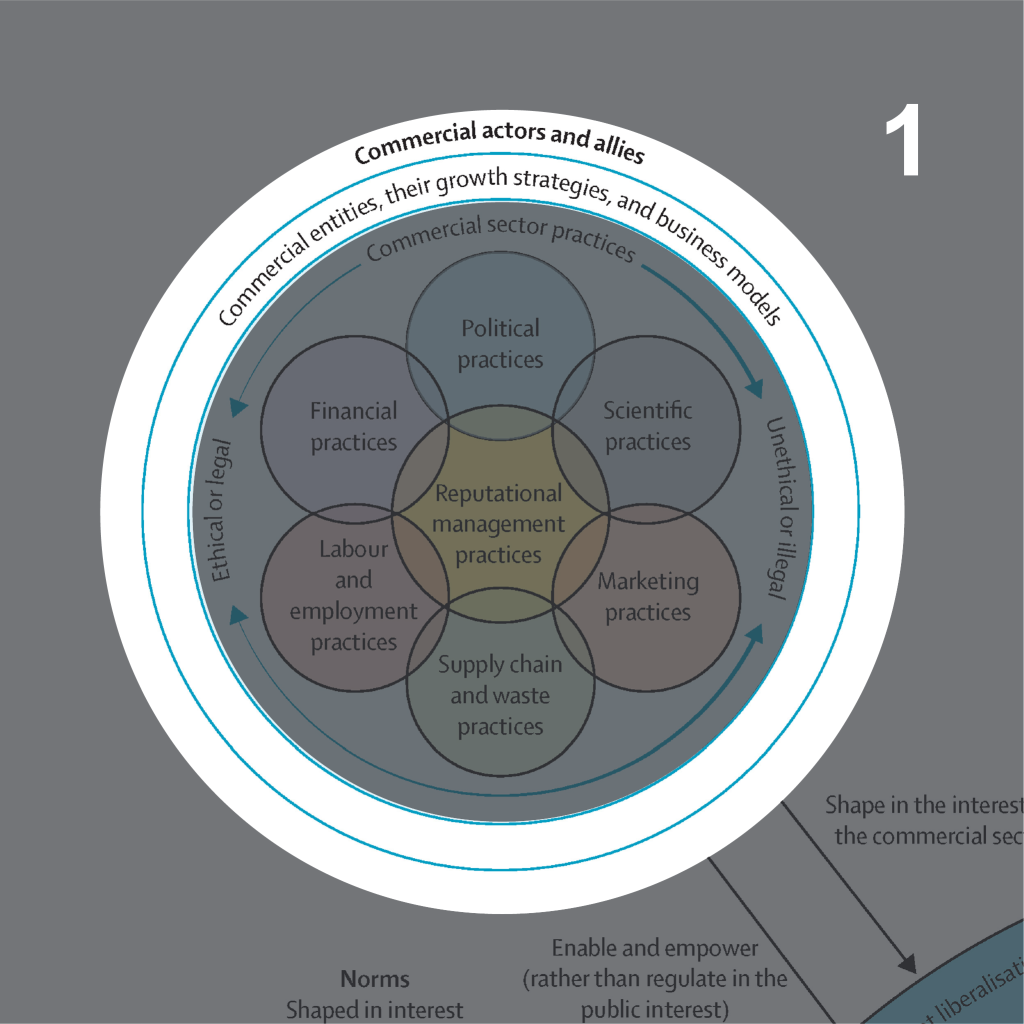
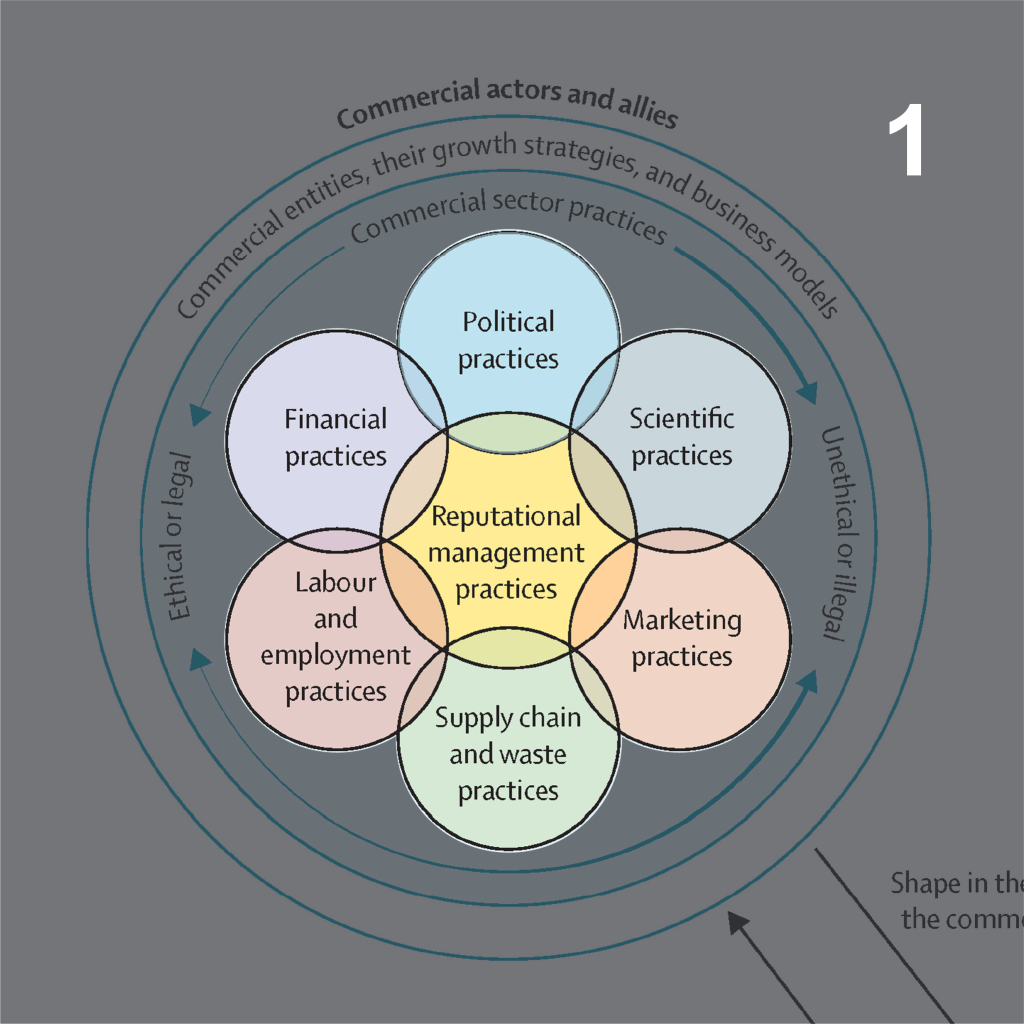
- Commercial entities and their practices
- A multi-level model of the determinants of health
- Systemic and underlying drivers
Guided by this model, in this web resource we approach addressing CDoH in four parts:
Because the range of possible actions is vast, it can be difficult to decide where to begin or what to prioritise. This resource is designed to support that decision-making process by demonstrating how the model can be used to map out different intervention points. Some of the approaches discussed are backed by strong evidence; others are more exploratory. Some interventions will have impacts across multiple parts of the model or system or at critical points within it and may, therefore, be particularly impactful or important. This resource aims to help you think through which options may be most appropriate for your setting and purpose.
Please choose a part below to start exploring, clicking on the “Learn More” buttons to access more detailed information.
Part A
Addressing Commercial Entities
One option is to focus on commercial entities.
To create healthier, fairer futures, we need to rethink how businesses operate – their structures, growth strategies and business models. We should encourage a shift away from “profit at any cost” approaches to models that put people and the planet first. This means shifting from focusing solely on shareholder profits to meeting the needs of society as a whole.
Part B
Addressing Commercial Practices
Tackling harmful commercial practices requires a range of actions, which can be grouped into two categories:
Actions that apply across the board:
- Monitor, expose, and counter harmful practices.
- Litigate and hold businesses accountable for their actions.
Actions that target specific practices:
- Regulate harmful practices to minimise damage.
- Enable positive practices, including through progressive procurement.
Part C
Approaches at Different Levels
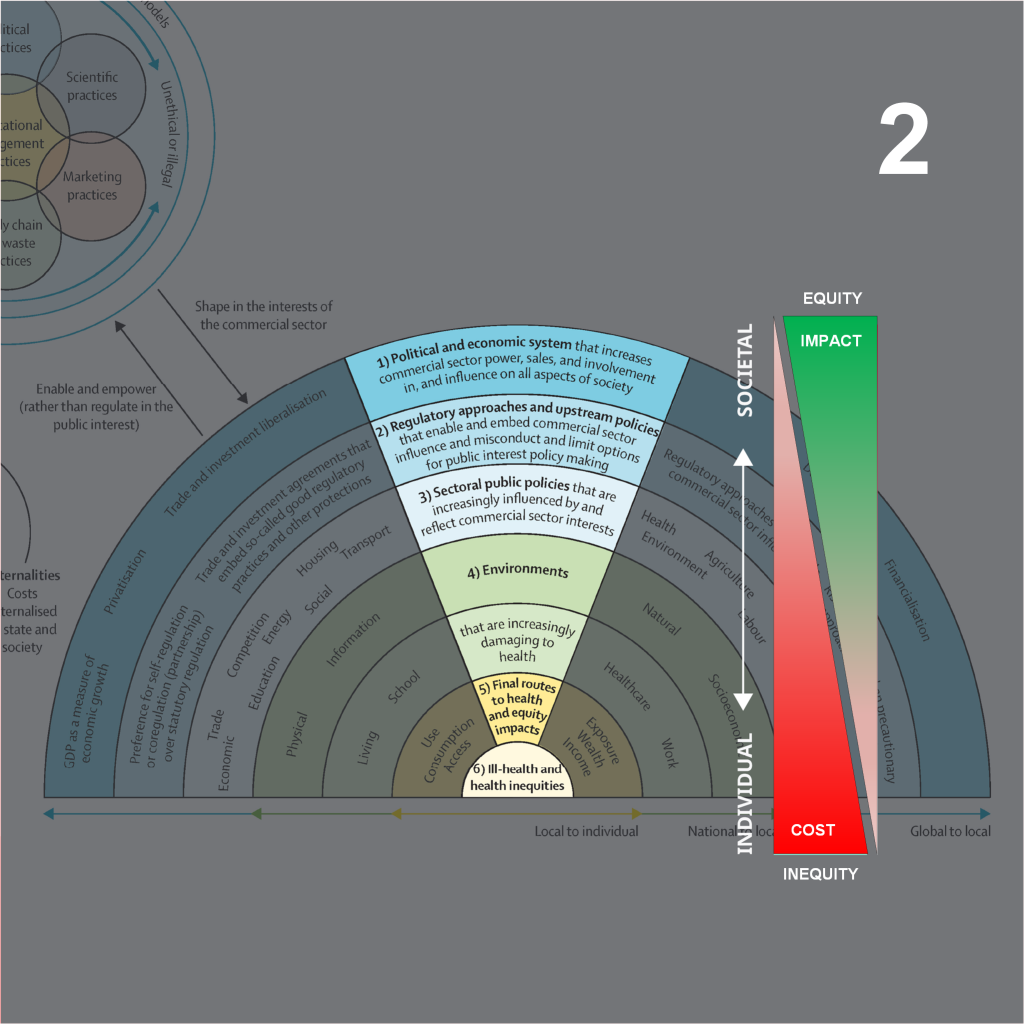
We can intervene at each level of the model to improve health and equity. Generally, interventions further out in the model have greater potential for impact and are more likely to improve equity and are generally cheaper to implement.
Levels 1 to 4: Interventions at these levels operate at a societal scale, either nationally (levels 1–3) or locally (level 4). These approaches:
- Have greater potential for impact.
- Are more likely to improve equity as they do not rely heavily on individual behaviour change.
Level 5: Interventions focusing on individual behaviour change:
- Tend to be more costly and less effective.
- Are more likely to increase inequity, especially when not supported by broader interventions that alter the environments in which people live and work.
Level 6: Interventions focused on treatment. While treatment is absolutely necessary, waiting until people become ill is ultimately unsustainable without preventive actions.
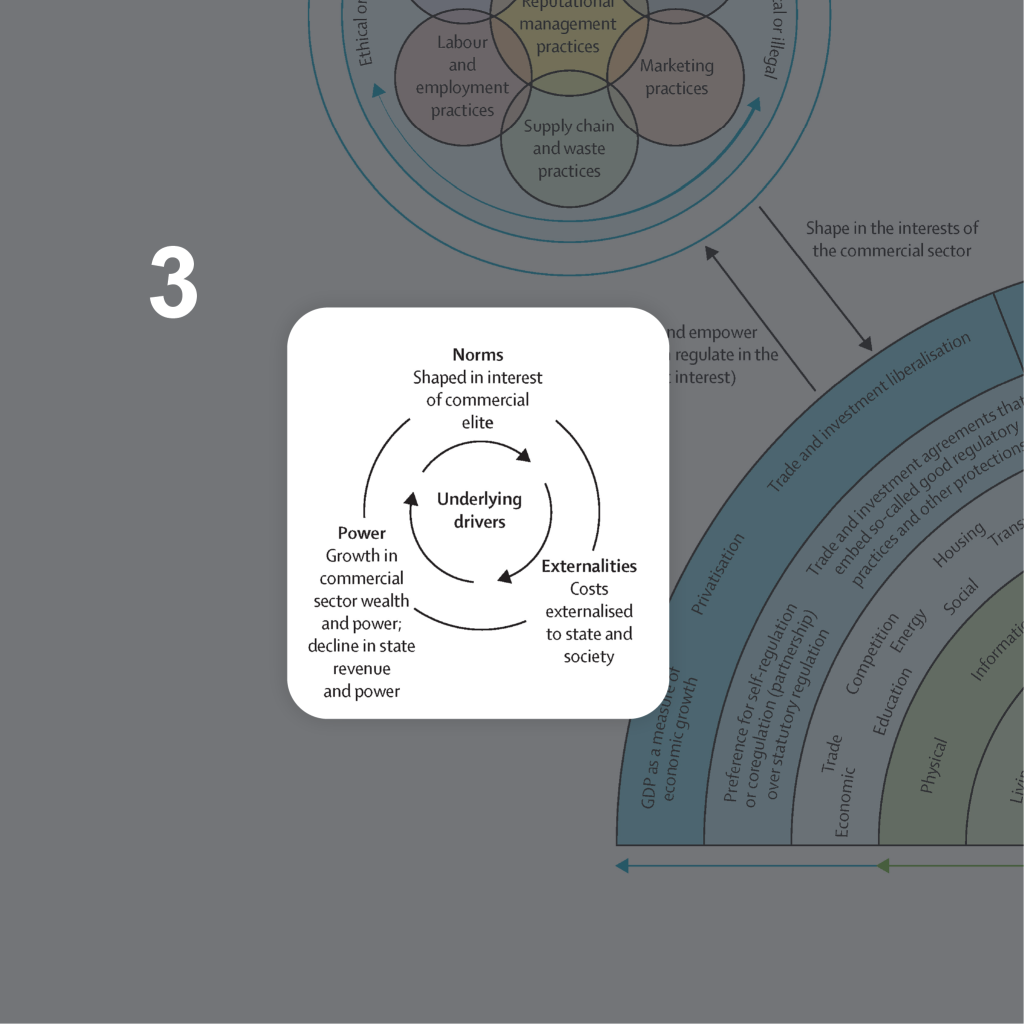
Part D
Addressing Power, Norms & Externalities
Externalities, corporate power, and norm shaping are closely intertwined. Commercial actors that harm health or the environment often externalise the costs of this harm onto others, allowing them to avoid responsibility and generate excess profits.
These profits become a key source of their power, which they wield in various ways, including by shaping societal norms – ideas, values and beliefs – to align with their interests.
By influencing these norms, they can promote consumption patterns and policy preferences that sustain their business models.
For further discussion on corporate power, see works by Woods et al, 2022 and Gilmore et al, 2023.